TheEverlasting
TheEverlasting is the biggest thing I’ve built so far.
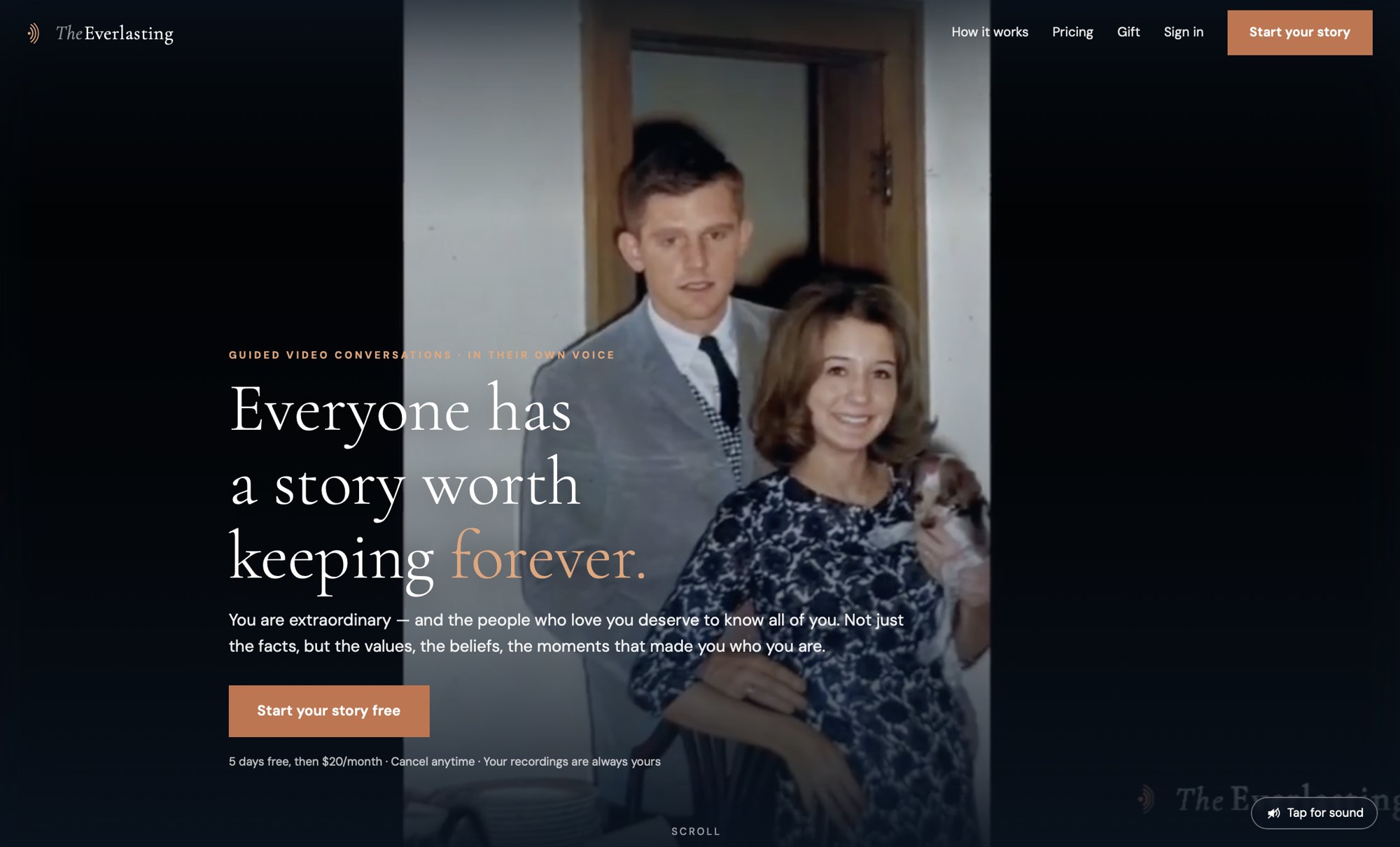
We’re using AI to capture people’s life stories and turn them into films their families can keep forever.
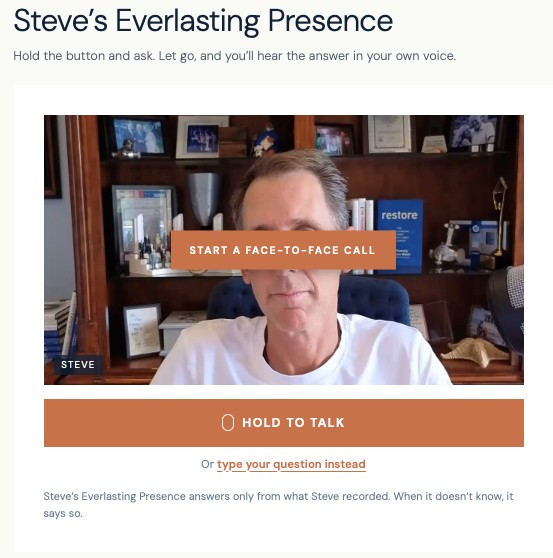
We’re also building Everlasting Presence, a digital twin that looks and sounds like someone and can allow their family to continue talking with them even after they’re gone.
My role has been figuring out how to bring the technology together into a system that actually works.
That’s what makes this project so fascinating to me.
- ElevenLabs
- Tavus
- Supabase
- Vercel
- Shotstack
- Claude Code
An AI interviewer people actually want to talk to
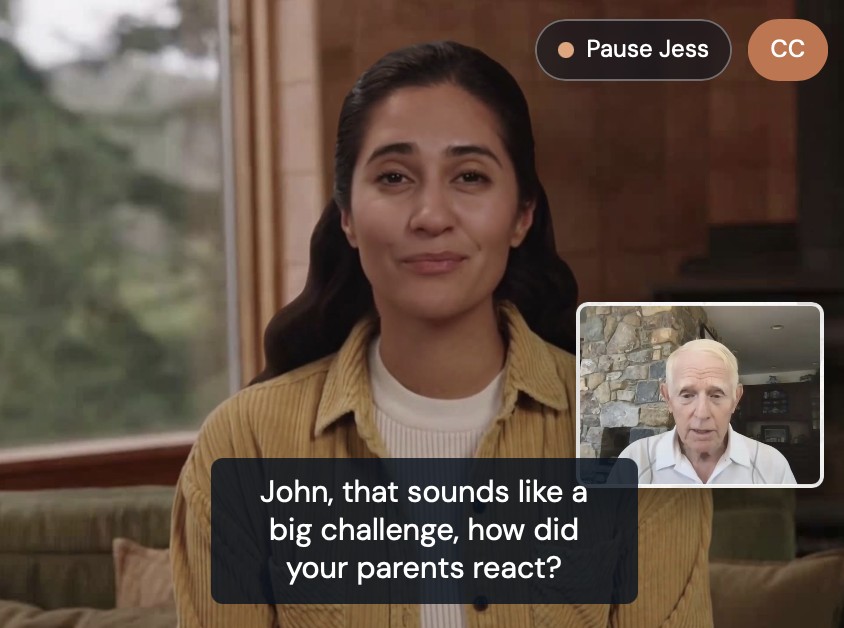
Jess is our AI interviewer.
Instead of giving someone a list of questions, she has a conversation with them. She listens, responds, and asks follow-up questions designed to bring out stories they may not have thought about in years.
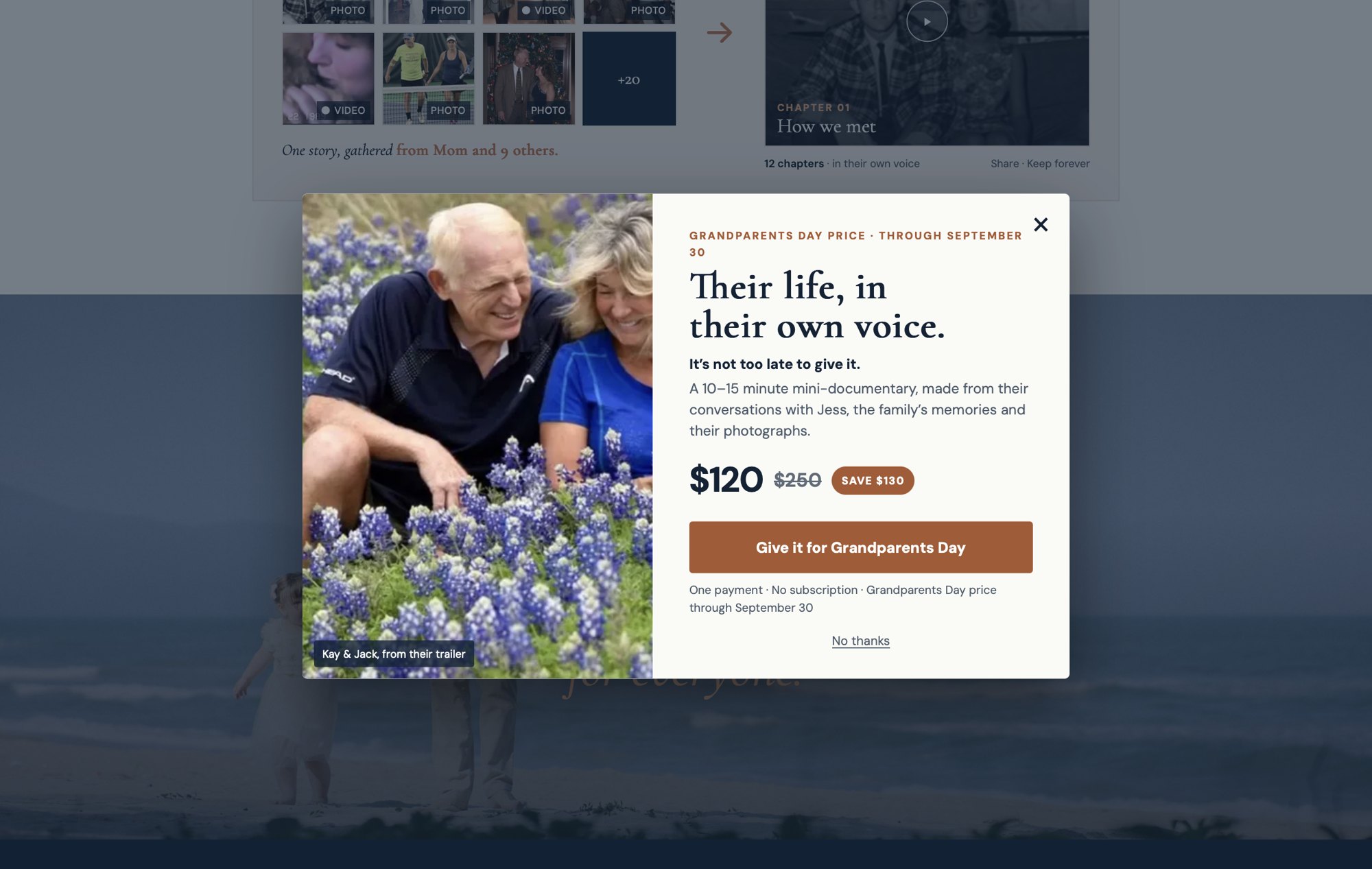
Those conversations, along with family photos and videos, become the foundation for the person’s film.
More realistic isn’t always better.
Testing Jess with real users taught us something we didn’t expect.
When she looked too much like a real person, people became less comfortable. We intentionally made her slightly less realistic and even a little pixely.
Timing matters too. A small pause feels natural. A pause that’s too long becomes uncomfortable.
Small changes in appearance, voice, timing, and follow-up questions completely changed how people interacted with her.
Building the system
My role became figuring out how to bring the different tools together and turn hours of recordings, photos, and videos into a finished story.
I worked on systems that could:
- Find important moments in recordings
- Create the story map
- Match photos and videos to those moments
- Add background music
- Create chapters
- Assemble the final documentary
I did most of my building with Claude Code while working across ElevenLabs, Tavus, Supabase, Vercel, and Shotstack.
I didn’t start with a software engineering background. I learned what I needed as the problems came up.
What if you could still ask them a question?
Everlasting Presence is the digital twin we’re working toward creating from someone’s recordings.
The goal is for it to look like them, sound like them, and answer using the things that person actually said while they were alive.
We’re currently working through details like voice cloning, facial movement, emotion, and timing so the interaction feels natural.
The twin cannot make things up.
Every response has to be grounded in that person’s actual recordings.
If you ask something they never discussed and there isn’t enough information to answer, the twin says so.
We never want AI putting words in someone’s mouth.
Real users changed what we built
I’ve been the main point of contact for our test users, so I’ve been able to work on the system while also seeing how people actually use it.
That’s how we learned Jess could be too realistic, improved her follow-up questions, and found problems we wouldn’t have caught otherwise.
One of our test users watched their finished film and started crying.
That moment put all of the technology into perspective. What matters is whether what we’re building means something to the person receiving it.
Our goal: build a company that can run with zero employees.
We’re not only asking how AI can improve the product. We’re asking how much of the company AI can actually run.
We’ve built three AI agents that handle different parts of the production process. The output is checked against a defined rubric.
The goal is for the process to eventually run from the initial recordings to the finished product without someone sitting there operating it.
We’re not just using AI inside a company.
We’re exploring what a company built around AI from the beginning can look like.